


Hail-resistant roofing in Central Texas: impact-rated shingles vs. standing seam metal
On this page · 9 sections
We do a lot of hail work across Spring Branch, Bulverde, Canyon Lake, New Braunfels, and north San Antonio, and once the claim is sorted out, almost every homeowner asks us the same thing: if we're putting a new roof on anyway, what can we put up there so we're not doing this again after the next storm? It's a fair question. Hail is part of living in the Hill Country, and the roof you choose decides whether the next storm is a nuisance or another tear-off.
For most homes the real choice comes down to two systems: impact-rated asphalt shingles and standing seam metal. We install both with our own crews, so we don't have a reason to push you toward one. Here's how we walk homeowners through the decision.
The short answer
Bottom Line Up Front
If you want better hail protection at the lowest price and a roof that matches the neighborhood, go with impact-rated shingles. If you're staying for the long haul and never want to replace a hail-beaten roof again, go with standing seam metal — and check your policy for a cosmetic-damage exclusion first.
Neither roof is hail-proof, and anyone who says otherwise is selling something. But both hold up far better than a standard shingle, and the right one depends less on the storm than on your budget, your insurance policy, and how long you plan to live in the house.
a shingle can carry
our metal roofs
senior discount
The rest of this post covers what hail actually does to each roof, where the insurance fine print comes in, and a decision matrix at the end that gets most homeowners to an answer in a couple of minutes.
What hail actually does to a roof
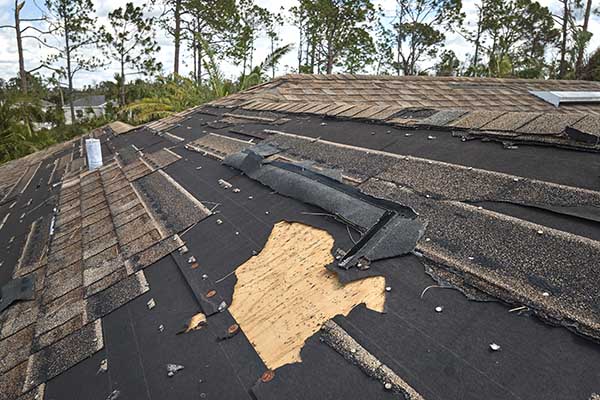
On a standard asphalt shingle, a hailstone doesn't usually punch a hole. It bruises. The impact knocks loose the granules that protect the shingle from the sun, cracks the mat underneath, and leaves a soft spot that looks like nothing from the driveway. A few summers of Texas heat later, that bruise is a leak. That's why so much hail damage goes unnoticed until it's expensive — we cover how to spot it in our post on hidden hail damage.
Metal behaves differently. A hailstone can't bruise a steel panel or strip its granules, because there aren't any. What it can do, if the stones are big enough, is dent it. Whether a dent matters depends on whether it's cosmetic or whether it has opened a seam or a fastener, and that's the distinction that drives most of what follows.
Option 1: Impact-rated shingles
Impact-rated shingles look like the architectural shingles on most houses in the neighborhood, but they're built to take a hit. Shingles are tested by dropping steel balls of increasing size onto them, and the highest rating, Class 4, means the shingle survived the largest ball without cracking. In practice, that means a Class 4 roof shrugs off a lot of the hail that would bruise a standard shingle.
The appeal is simple: you get much better hail resistance for less money up front than metal, the roof looks like every other shingle roof on the street, and a damaged shingle can be swapped out on its own. The trade-off is that "impact-resistant" is not "hail-proof." A big enough storm will still damage them, and they still wear out the way shingles do. Some insurers offer a premium discount for a Class 4 roof — ask your agent before you choose, because it varies by company and policy.
Option 2: Standing seam metal
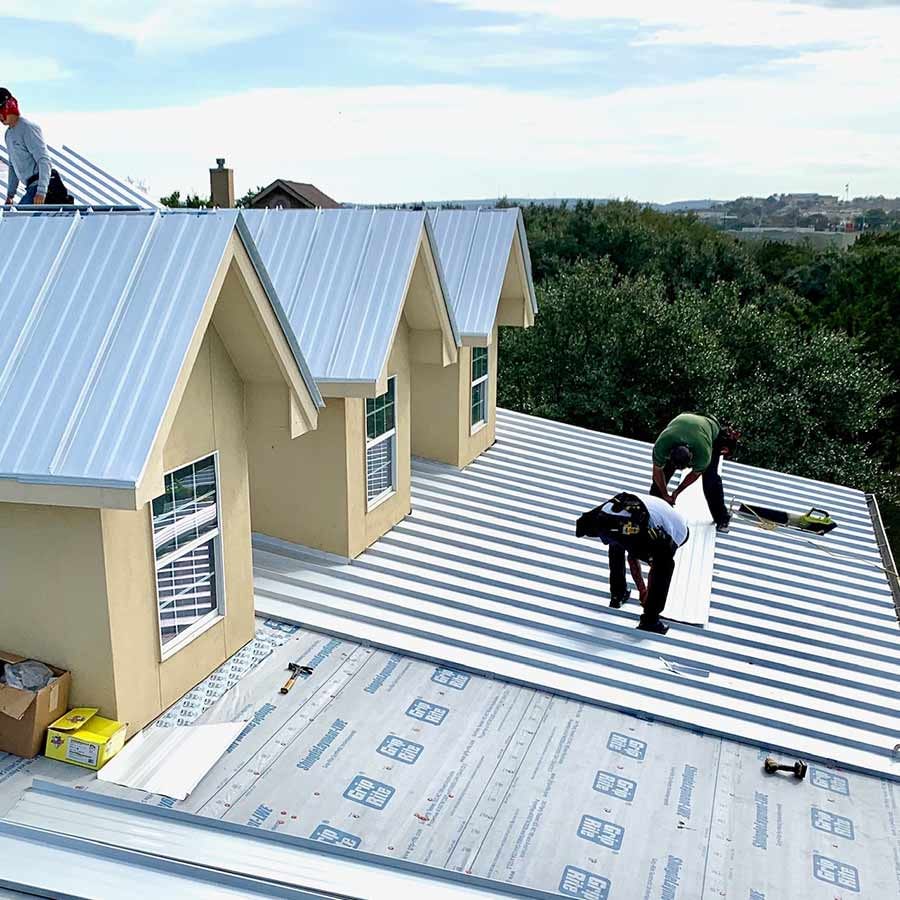
Standing seam metal is what we put on when a homeowner tells us they never want to think about their roof again. The panels run from ridge to eave with raised seams and concealed fasteners, so there are no exposed screws for hail to work loose. We run three metal crews and our own metal machines, which means the roof we sell you is the roof our own people build.
Metal costs more up front than shingles, and in a severe storm large hail can leave dents. Most of the time those dents are cosmetic: the panel still sheds water. But check your policy, because some include a cosmetic-damage exclusion that won't pay for dents that don't cause leaks. On the plus side, a metal roof also does a better job with our other weather problem, summer heat — more on that in our post on how Texas heat wears down a roof.
Impact-rated shingles vs. standing seam metal at a glance
Here's the comparison we'd sketch out for you on the tailgate. The highlighted cell is the stronger answer when that row is the one driving your decision.
| Factor | Impact-Rated Shingles | Standing Seam Metal |
|---|---|---|
| Upfront cost | Lower | Higher |
| What hail does to it | Resists most bruising and cracking | No granules to strip; large hail can dent |
| Look | Matches most shingle neighborhoods | Clean, modern lines |
| Summer heat | Depends on attic ventilation | Handles Texas sun well |
| Fixing storm damage | Single shingles swap out easily | Panel work is a bigger job |
| Insurance | Some insurers discount Class 4 | Watch for cosmetic-damage exclusions |
| Staying long term | Solid choice | The roof you stop worrying about |
A general comparison. Your roof's pitch, decking, ventilation, and insurance policy change the details, and we confirm them on site before we recommend anything.
Two lines in your homeowner's policy can change this whole decision: whether your insurer discounts an impact-rated roof, and whether the policy excludes cosmetic damage to metal. Both are a five-minute call to your agent, and it's much better to make that call before the roof goes on than after the next storm.
Impact-rated shingles
Better hail protection, a familiar look, and a lower price than metal.
Why homeowners choose them
- The roof looks like the architectural shingles on the rest of the street.
- The upfront cost is lower than standing seam metal.
- A damaged shingle can be replaced on its own after a storm.
- Some insurers offer a premium discount for a Class 4 roof.
What to weigh
- A big enough storm can still bruise or crack them.
- They still lose granules and age the way shingles do.
Standing seam metal
The longest-lasting answer to hail country, at a higher price up front.
Why homeowners choose it
- There are no granules for hail to knock off and no exposed fasteners to loosen.
- It handles summer heat on the attic better than most shingles.
- We back our metal roofs with a 35-year warranty.
- It's built by our own metal crews on our own metal machines.
What to weigh
- It costs more up front than shingles.
- Large hail can leave cosmetic dents, and some policies won't pay for those.
What about tile roofs?
We install and repair tile roofs too, and plenty of homes around San Antonio and the Hill Country have them. Tile is long-lived and handles heat well, but individual tiles can crack under hail. The good news is that cracked tiles can usually be replaced one at a time, so a hailstorm on a tile roof is more often a repair than a replacement. If you already have tile and it's in good shape, that's often the roof to keep.

Insurance, timing, and the crews that follow the storms
If hail is the reason you're replacing your roof, your insurance claim may be paying for most of it, and that's the moment to ask whether an upgrade makes sense. Your claim typically covers a roof like the one you had; the difference to step up to a Class 4 shingle or metal is often a smaller number than homeowners expect. We work with insurance companies all the time, and our post on storm damage and your insurance company walks through the claim itself.
After a big hailstorm, the neighborhood fills up with door-knockers. A lot of them sell the roof and then turn around and hand the job to whoever is cheapest. Ask any roofer who will actually install your roof and whether those people work for them. We run all of our own crews and our own equipment, and we do everything in house — that's a question every contractor should be able to answer plainly.
“Hail is going to come back. The only real question is whether the next storm costs you a phone call to your agent or another roof.”— Wilson Roofing and Renovations
The decision matrix
Read down the left column to the rows that describe your home and your plans, then see which side wins more of your rows. Most homeowners land on an answer quickly once they see it laid out.
| If your home… | Impact-Rated Shingles | Standing Seam Metal |
|---|---|---|
| Needs the lowest upfront cost | Yes | Costs more up front |
| Is your long-term home | Good choice | Best fit |
| Is in an HOA that expects a shingle look | Yes | Check the rules first |
| Has a policy that excludes cosmetic damage | Fewer surprises | Read the fine print |
| Has an insurer that discounts impact-rated roofs | Ask your agent | If the panel is rated |
| Has a hot attic in full afternoon sun | Fix the ventilation too | Strong choice |
| Already has a sound tile roof | Keep the tile | Keep the tile |
The bottom line
Both options are a real step up from a standard shingle roof in hail country. Impact-rated shingles give you better protection at a lower price and keep the look your neighborhood expects. Standing seam metal costs more but is the closest thing to a roof you stop worrying about. If you're comparing materials more broadly, our metal vs. shingle breakdown and our guide to roof warranties are good next reads.
If you're not sure which roof fits your house, that's what a free estimate is for. We'll look at the roof, talk through your policy and your plans, and give you an honest recommendation for a roof replacement in either material. We offer financing, and a 5% military and senior discount. When you're ready, request a quote and we'll get you on the schedule.