


Roof Warranties Explained: Manufacturer vs. Workmanship Coverage
On this page · 8 sections
When we hand a homeowner an estimate for a new roof, the warranty is usually the last line they read and the first thing they wish they had read closer. “Fifty-year warranty” sounds like the roof is covered for fifty years, no matter what. It isn't, and the gap between what people assume and what the paperwork actually says is where a lot of frustration lives — especially after the first big hailstorm rolls through the Hill Country.
A new roof really comes with two different promises from two different parties: one from the company that made the materials, and one from the company that installed them. They cover different failures, they're voided in different ways, and neither one covers hail. Here's how we explain it to homeowners from Spring Branch to San Antonio, so you know exactly what you're buying before you sign.
The short answer
Bottom Line Up Front
The manufacturer warranty covers defective materials. The workmanship warranty covers installation mistakes. Neither one covers hail, wind, or fallen limbs — that's your homeowner's insurance.
The long number on the brochure is the manufacturer's coverage on the product, and it often comes with a prorated schedule and conditions about registration, installation, and later repairs. The workmanship warranty is only as good as the contractor behind it, so who installs your roof matters as much as what goes on it.
on the systems we install
on metal roofs
materials and workmanship
The rest of this post breaks down each type of coverage, what quietly cancels it, and a table at the end that tells you whether to call your roofer or your insurance company.
Two warranties, two different jobs
The manufacturer warranty covers the materials themselves. If a batch of shingles was made wrong and starts cracking, blistering, or shedding granules years before it should, that's a product defect, and the manufacturer stands behind it. On the systems we install, that coverage runs up to 50 years, and 35 years on metal. Many manufacturer warranties are prorated, though, which means the share they pay shrinks as the roof ages. Read that schedule before you assume the full replacement cost is covered in year 30.
The workmanship warranty covers the installation. A flashing detail done wrong, a valley that wasn't sealed properly, nails driven at the wrong angle — those aren't the shingle's fault, and the manufacturer won't pay for them. That promise comes from the contractor, which is why it is only worth as much as the company behind it. A workmanship warranty from a crew that sold you a roof and subbed it out to the cheapest bidder is a piece of paper with nobody standing behind it.
That's a big part of why we run all of our own crews and our own equipment. When we put a new roof on your house, the people who installed it are the same company that backs the workmanship.
Manufacturer vs. workmanship at a glance
Each row is a question homeowners ask us about their coverage. The highlighted cell is the warranty that actually answers it.
| Question | Manufacturer Warranty | Workmanship Warranty |
|---|---|---|
| Who backs it | The company that made the materials | The contractor that installed the roof |
| Shingles cracking or blistering early | Covered as a product defect | Not an installation issue |
| Leak at a flashing or valley | Not a product defect | Covered as an installation issue |
| Ventilation installed wrong | Often grounds to deny a claim | The installer's responsibility |
| Coverage over time | Often prorated as the roof ages | Set by the contractor's terms |
| Hail or wind damage | Not covered | Not covered |
| Selling the house | Transfer depends on the product terms | Depends on the contractor |
| Worth the paper it's on | If registered and installed to spec | If the installer is still in business |
Terms vary by manufacturer, product line, and contractor. Your own warranty documents are the final word on what is covered.
Many manufacturer warranties have to be registered after installation to take effect, and some of the longer warranties are only available through installers registered with that manufacturer. Ask your contractor whether your warranty has been registered, get a copy of the registration, and keep it with your closing documents. If you sell the house, that paper is what lets the coverage transfer to the next owner, where the warranty allows it.
What quietly voids a roof warranty?
Most warranties aren't lost in a single dramatic event. They're lost in small decisions years after the install: a satellite dish bolted through the shingles, a cheap patch by whoever was available after a leak, a second layer of shingles laid over the first to save on tear-off. Manufacturers write their warranties around a complete roof system installed to their specifications, so anything that changes that system can give them a reason to deny a claim.

Poor attic ventilation is another one that catches Texas homeowners off guard. Trapped summer heat bakes shingles from underneath, and many manufacturers treat an under-ventilated attic as an installation problem, not a product defect. If you're curious how that works, our post on attic heat and ventilation goes deeper.
Keeps your warranty intact
Habits that keep both promises in force for the life of the roof.
What protects coverage
- The registration paperwork is filed and a copy is stored with your house documents.
- Repairs are done by the original installer, using matching materials.
- Gutters are kept clear so water drains off the roof instead of backing up under the edge.
- Storm damage is documented and reported promptly, before it causes secondary leaks.
Puts your warranty at risk
Common changes that can give a manufacturer a reason to deny a claim.
What can void coverage
- A satellite dish, antenna, or solar mount bolted through the roof without proper flashing.
- A new layer of shingles laid over the old roof instead of a full tear-off.
- A patch from a different contractor using mismatched shingles or sealant.
- Pressure washing that strips granules off the shingle surface.
Warranty or insurance: who pays for hail?
This is the question we hear most, because we do a lot of hail work around here. The honest answer: hail is weather, and weather isn't a manufacturing defect or an installation mistake. Standard roof warranties don't cover it. Hail, wind, and fallen limbs are what your homeowner's insurance policy is for.
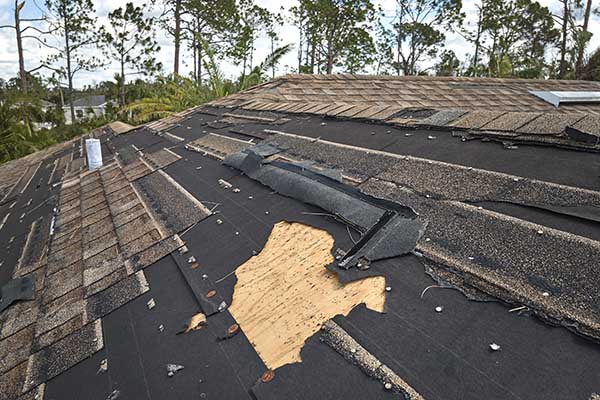
We work with insurance companies all the time, and the process goes smoother when the damage is documented properly from the start. Hail bruising isn't always visible from the driveway, either — our post on hidden hail damage explains what to look for, and this guide to storm damage claims walks through working with your adjuster.
After a big hailstorm, out-of-town crews show up offering fast replacements and long workmanship warranties. A workmanship warranty is a promise from the installer, and it's worthless if that installer is three states away when your flashing starts leaking. Before you sign, ask who will actually install the roof, whether any of the work is subcontracted, and where the company will be in five years.
Does a metal roof warranty work differently?
The same two-part structure applies: the panel and finish are covered by the manufacturer, and the install is covered by the contractor. On standing seam metal, we use primarily mackleroy metal, and the coverage we offer runs 35 years on metal. Because we run our own metal machines and form panels in house, the panels on your roof and the people installing them come from the same shop.
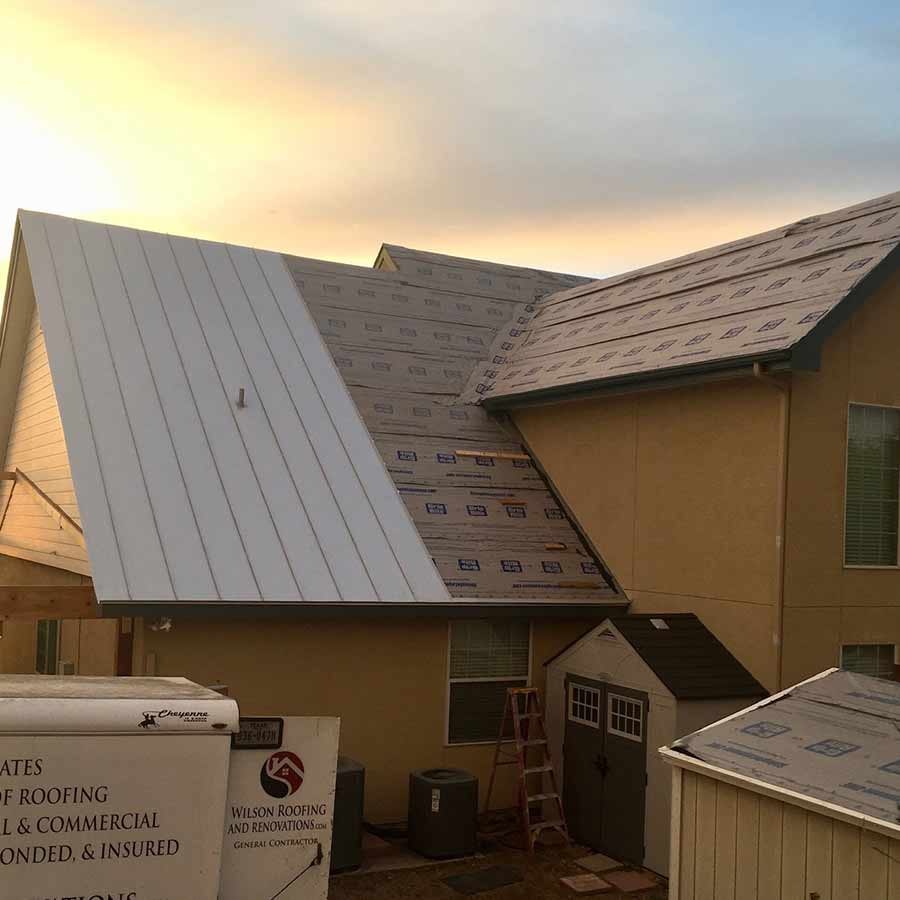
If you're still deciding between materials, our metal vs. shingle comparison covers the trade-offs, and the roofing page shows the shingle, metal, and tile systems we install.
“A warranty is only as good as the company that has to honor it. That's why we run our own guys, our own equipment, and do everything in house.”— Wilson Roofing and Renovations
Who do you call: your roofer or your insurer?
Find your situation in the left column. The chips tell you which kind of coverage usually applies, and why. Every policy and warranty has its own fine print, so treat this as a starting point, not a ruling.
| If your roof… | Warranty | Insurance |
|---|---|---|
| Was dented or bruised by hail | Weather isn't a defect | File a claim |
| Lost shingles in a windstorm | Check the wind terms | Usually |
| Has shingles cracking or blistering early | Manufacturer defect | Not a sudden loss |
| Leaks at a flashing soon after install | Workmanship | Installer's job |
| Was hit by a fallen tree limb | Not covered | Typically |
| Was patched by a different contractor | May be voided | Not a covered event |
| Is simply wearing out with age | Prorated at best | Maintenance item |
The bottom line
A good roof warranty is really two promises: a manufacturer standing behind the materials, and an installer standing behind the work. Protect both by keeping your registration paperwork, keeping the roof system intact, and calling the original installer when something needs fixing. When storms do the damage, that's an insurance conversation, and it helps to have a roofer who works with insurance companies regularly. And if a leak shows up, resist the urge to patch it yourself; our post on the hidden costs of DIY roof repairs explains why.
If you want to know what your current roof is covered for, or what a new one would come with, we're happy to walk through it. Whether it's a repair or a full replacement, request a free estimate and we'll explain the warranty in plain language before you sign anything. We also offer financing for homeowners who want to spread the cost out.