
Why Your Attic Runs Hot, and What Your Roof Has to Do With It
Your Air Conditioner Isn't the Whole Story
Every September we get the same call. The August bill landed, it was higher than last year, and the homeowner already had the HVAC serviced in the spring. The unit is fine. The thermostat is set the same as always. So where is the money going?
More often than people expect, it is going into an attic that got up to 140 degrees by two in the afternoon and stayed there until well after dark. That attic sits directly under your roof, and how your roof is built determines how much of the Texas sun ends up in your living room. After 30 years on Hill Country roofs, we can usually tell you within twenty minutes whether the roof is helping or hurting.
Request a Free Roof Inspection
Five Things That Decide How Hot Your House Gets
A roof is not just the thing that keeps rain out. It is a system, and every piece of it either moves heat away from your house or traps it inside. Here is what matters, in the order we check it.
Heat Doesn't Come Through Your Windows
Sunlight hits your roof surface and heats it. On a dark asphalt shingle in July, that surface can reach 160 degrees. The heat conducts down through the shingles into the decking, and the underside of that decking then radiates into your attic space. That radiant heat crosses the attic and lands on the top of your ceiling. From there it works its way into the rooms below all evening, long after the sun has gone down.
This is why a house can feel hotter at eight at night than it did at five. The roof stored the heat and is now releasing it. Every layer between the sun and your ceiling either slows that process or speeds it up, and a full roof renovation is the point at which you get to change those layers.
"Wilson Roofing was fairly priced with exception service, material and workmanship. Would highly recommend to anyone looking for a 50yr metal roof."
See our profile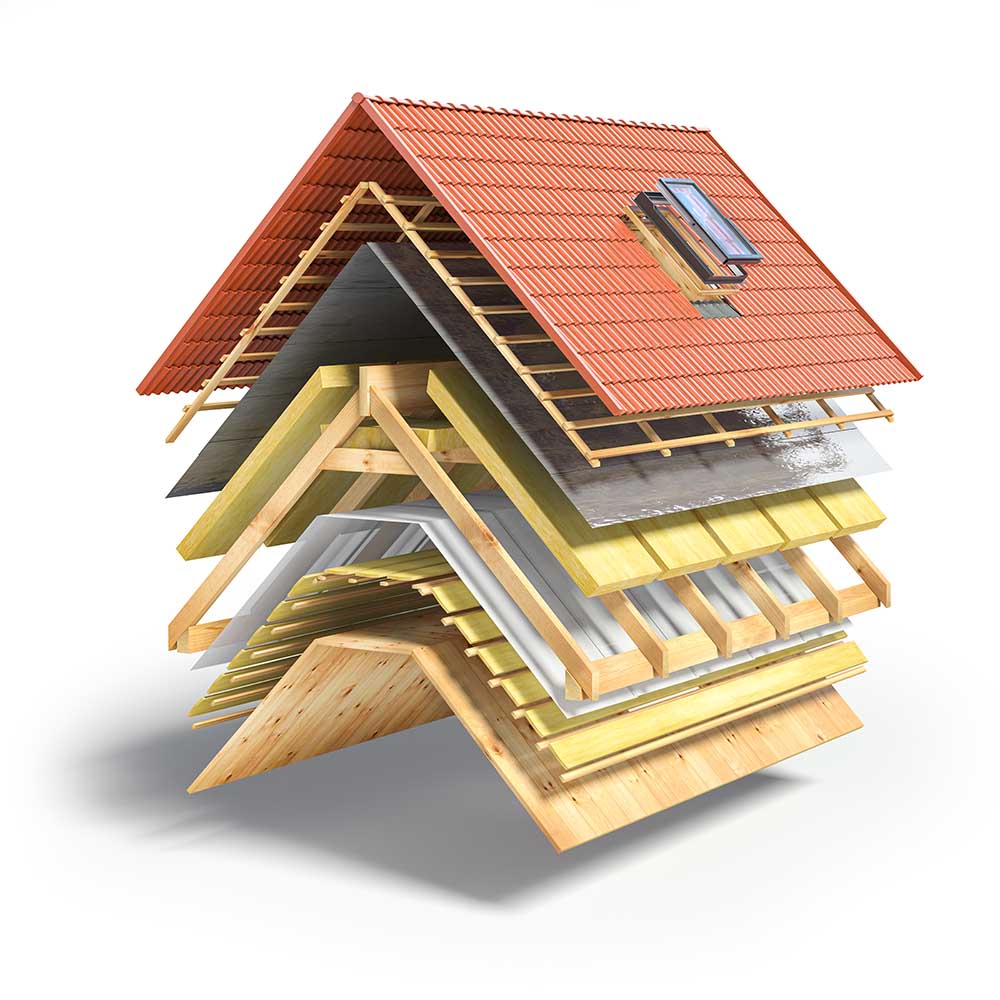
A Vent Alone Does Nothing
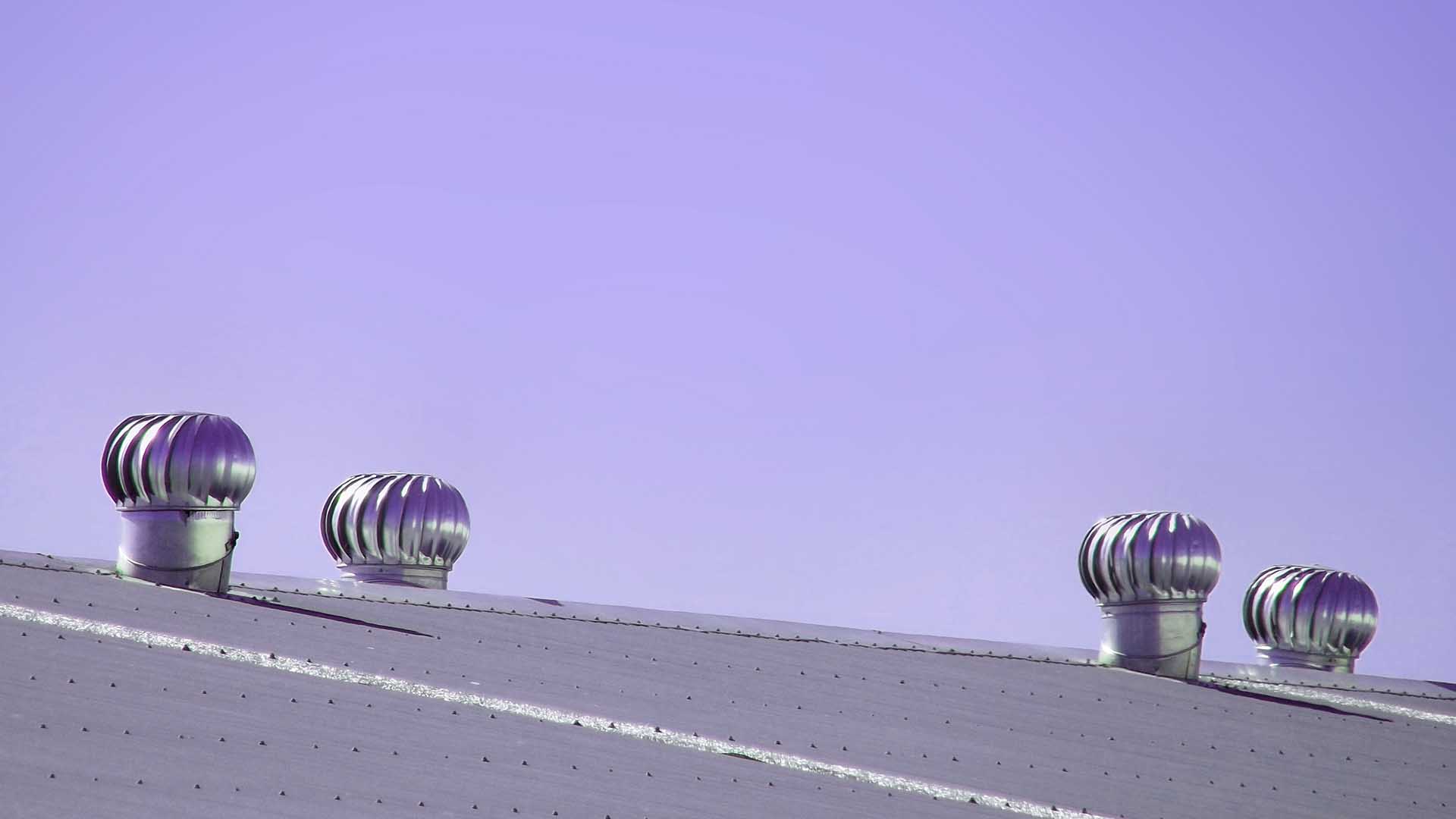
Attic ventilation only works as a pair. Cool air has to enter low, usually through soffit vents along the eaves, and hot air has to leave high, through ridge vents or turbines near the peak. If the intake is blocked or missing, the exhaust vents have nothing to pull and the whole system stalls. We see this constantly on homes where blown insulation was added years ago and buried the soffit vents completely.
We also see the opposite problem: three different exhaust types on one roof, all fighting each other. A ridge vent and a powered fan on the same slope will short-circuit, pulling air from each other instead of from the attic floor. Balance matters more than quantity.
"We had some opening in our metal roof that was left during construction 5 years ago. Stephen had his employees find and fix all the location."
See our profile
Ventilation Moves Heat. Insulation Stops It.
People treat these as competing fixes. They are not. Ventilation clears the hot air out of the attic so it does not build up and cook the decking from below. Insulation on the attic floor is what keeps the remaining heat from reaching your ceiling. You need both, and improving one while ignoring the other gets you a fraction of the benefit.
Most Hill Country homes built before the mid-2000s have insulation that has settled, compressed, or been walked on until it no longer performs at its rated value. It looks like plenty of insulation. It measures like half of it. When we are already up there for a re-roof, that is the cheapest time in the life of the house to address it properly, because access is open and the crew is already on site.
The same visit is when we find the things nobody planned for: bathroom fans venting straight into the attic instead of outside, gaps around can lights, and daylight showing through at the eaves. None of those are roofing problems on paper. All of them show up on your electric bill.
"Wilson Roofing just completed a full roof replacement for us. Metal roof at the the same cost of other asphalt shingle quotes."
See our profileWhere the Savings Come From
A properly vented and insulated attic keeps peak attic temperatures meaningfully lower, which means your air conditioner cycles less often and runs shorter cycles when it does. Upgraded ventilation paired with modern insulation commonly cuts energy costs by up to 15 percent. That number moves around depending on the house, the shade, and how the ductwork runs, but the direction is always the same.
There is a second saving people forget about. Trapped attic heat bakes the underside of your decking and shortens the life of the shingles above it. A roof that runs cool lasts closer to its rated life. A roof over a 140-degree attic does not, and you end up paying for the next one earlier than you planned.
"The crew arrived on time each day and maintained a clean worksite. I am thoroughly impressed and highly recommend them to everyone."
See our profile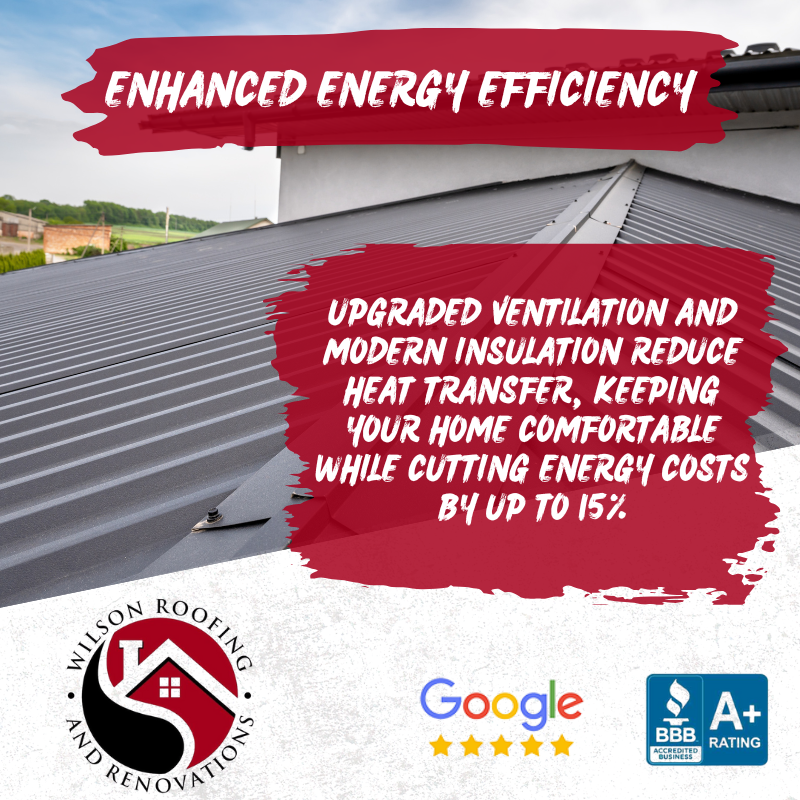
Central Texas Is Its Own Problem
Roof advice written for Ohio does not apply here. We get long stretches above 100 degrees, high UV load, and then a hailstorm that undoes six months of good weather in eleven minutes. Ventilation strategies that work in a mild climate are not aggressive enough for a Hill Country August, and insulation levels that pass code in cooler states leave money on the table here.
We are based in Spring Branch and work the corridor from Boerne and Bulverde through San Antonio and out to New Braunfels, Canyon Lake, and the Austin suburbs. That means we know which subdivisions have the buried soffit problem and which builders skipped ridge venting entirely. If you are weighing whether the fix is worth it, our roof replacement page walks through what a full tear-off includes.
"Absolutely awesome company. Excellent attention to detail, knowledgeable and honest."
See our profileOur Attic and Roof Assessment
No cost, no pressure, and you get the photos whether or not you hire us.
Schedule the Visit
Call or request online. We work around your schedule, including evenings when that is what it takes.
Check the Attic First
We go inside before we go up. Attic conditions tell us more about your roof than the shingles do.
Inspect the Roof Surface
Decking condition, vent placement, flashing, penetrations, and any storm damage from the last few seasons.
Measure and Document
Insulation depth, intake-to-exhaust ratio, and photos of anything we want you to see for yourself.
Walk Through Options
Sometimes that is a vent correction. Sometimes it is a full renovation. We tell you which and why.
Do the Work Right
Assigned project manager, daily cleanup, and updates you do not have to chase down.
Attic Heat and Ventilation, Answered
The clearest signs are upstairs rooms that stay hot into the evening, an attic that feels like an oven well after sunset, and an air conditioner that runs almost continuously in the afternoon. Rust on nail tips in the attic and cupping shingles are also common indicators. A quick look at your soffits from the ground will often tell you whether intake vents were ever installed or later painted and blocked over.
Usually not, and sometimes it makes things worse. A powered fan with inadequate intake will pull conditioned air out of your house through ceiling gaps instead of pulling hot air out of the attic, which raises your cooling bill rather than lowering it. Fix the intake first. If the intake is adequate and you still need more exhaust, then a fan can make sense.
Yes, particularly in a lighter or reflective finish, because metal reflects more solar radiation and sheds accumulated heat quickly once the sun is off it. Asphalt holds heat much longer into the evening. That said, a metal roof over a poorly vented attic will still leave you with a hot house, so the assembly underneath matters as much as the panel on top.
If your roof has several good years left, correcting intake and exhaust now is worth doing on its own and costs a fraction of a replacement. If the roof is near the end of its life anyway, wait and do it as part of the tear-off, when access is open and the labor is already being paid for. An inspection will tell you which situation you are in.
Ventilation and insulation upgrades are maintenance and improvement, so they are not typically covered. Storm damage is a different matter entirely, and we work directly with insurance companies on hail and wind claims. If we find damage during the inspection that belongs in a claim, we will tell you and we will be there when the adjuster comes out.
Ventilation corrections on their own are generally a modest project, while a full renovation with new decking, ventilation, and insulation sits at the other end of the range. We will not quote a number without seeing the house, because the honest answer depends on square footage, pitch, and what we find in the attic. Financing is available if the timing is difficult.
I scheduled an initial free roof inspection and had the privilege of meeting and working with one of the project managers, Mark. He did a great job during the roof inspection process and then provided some great information and advice on the various roof materials and the installation process. I then received the various quotes and I knew that Wilson Roofing was the choice to go with as there was no fluff.
Related Services
Roof Renovation
Ventilation, insulation, drainage, and structural corrections handled as one coordinated upgrade.
Learn MoreRoof Replacement
Full tear-off and rebuild in metal, shingle, or tile, with a written scope before anything starts.
Learn MoreSeamless Gutters
Custom-formed on site to move water away from your fascia, soffit vents, and foundation.
Learn MoreThirty Years on Central Texas Roofs
30 Years of Experience
Three decades of roofing and renovation work across the San Antonio and Austin corridors.
5.0-Star Google Rating
Hundreds of Central Texas homeowners have rated us five stars. Read them yourself, unedited.
Assigned Project Managers
One person owns your job start to finish, so you are never chasing an answer.
Insurance Claims Handled
We work directly with insurers on storm and hail damage and stand with you at the adjuster visit.
Financing Available
A hot attic does not wait for a convenient month. Financing options are available on larger projects.
24/7 Emergency Repairs
Storm opened your roof at eleven at night? Call. Someone answers and someone comes out.
Areas We Serve
Find Out What Your Attic Is Costing You
Fall is the right window for this work. The weather cooperates, our schedule is more open than it will be after the first hailstorm, and anything we fix now is in place before next June. The inspection is free either way.
Get in Touch
Call us or send a request. We will find a time that works this week or next.
Free Inspection
Attic first, roof second, photos of everything. You get a written scope and a real number.
We Do the Work
Assigned project manager, daily cleanup, and a crew that treats your house like it is theirs.